
Complete Guide: Explore Zero Based Budgeting
Master Every Penny with Zero Based Budgeting!

Zero-based budgeting is a simple yet powerful way to take control of your money. Instead of carrying over last month’s spending, you justify every dollar, every month —whether it’s paying bills, building savings, or enjoying a treat. This method of budgeting helps make sure that no dollars are aimed at the wrong targets. Below we break it down with clear examples and specific steps while explaining the features and benefits so you can make a budget that truly works for you.

Advantages & Disadvantages of Zero Based Budgeting
Find out how zero-based budgeting can help you save money and stay intentional with every dollar, plus the extra time it might take to set up.
Zero Based Budgeting Example
Walk through a simple, real-life example of zero-based budgeting that shows how to assign every dollar of your income a specific job. Hear from real people and their experience with zero based budgeting. Bonus: Free zero based budget template!
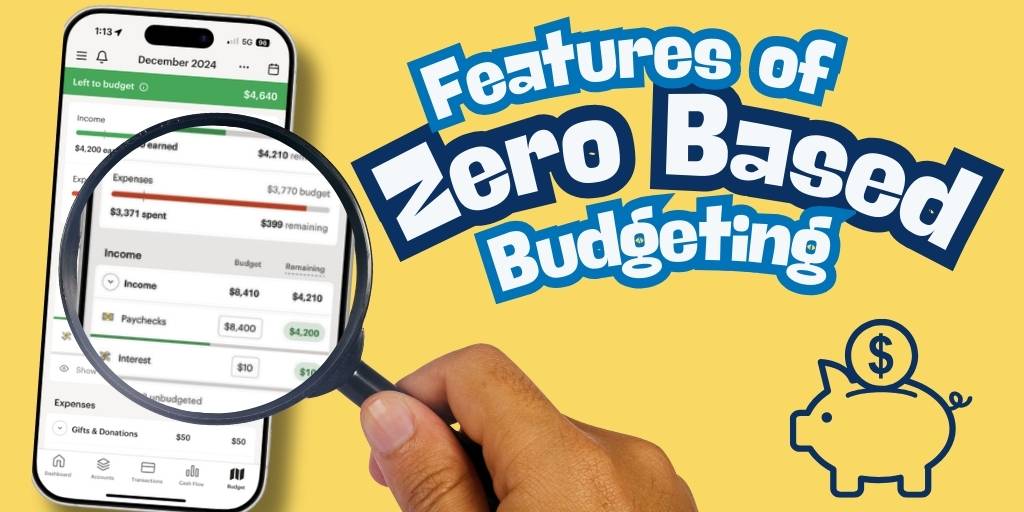
Zero Based Budgeting Features
Get to know the main ingredients of zero-based budgeting—like starting from scratch each month and making every expense earn its place.

Steps of Zero Based Budgeting
Follow the easy step-by-step process to create your own zero-based budget, from listing income to giving every dollar a purpose.
Need the spreadsheet now? Calculators & Templates [Calculators] [Templates] • Prefer a different budgeting system? Alternatives to ZBB [Alternatives]
What Is Zero-Based Budgeting?
The Core Idea in One Sentence
Zero-based budgeting means you start every month at $0 and give every single dollar a specific job—until your income minus your expenses equals exactly zero. Monies not needed for daily living still get a job – like savings or retirement or even a sinking fund.
How It Actually Works in Your Life
- Add up your take-home pay (after taxes, 401(k), etc.). Example: $3,200 lands in your checking account this month.
- Write down every expense category you choose to fund—rent, groceries, Netflix, savings, that weekend concert.
- Assign dollars to each category until you hit $3,200 assigned and $0 left unclaimed. If you only assign $2,900, you still have $300 with no job—how about assigning it to savings?
The “Before vs. After” You’ll Feel
- Before ZBB: Money hits your account → random swipes → “Wait, I’m broke already?”
- After ZBB: Money hits your account → you decide where it goes → calm, clarity, control.
Why the “Zero” Matters
You’re not hoping leftovers become savings. You’re forcing every dollar to work for your priorities—whether that’s debt or a down-payment fund.
See a real $3,200 month → [Example of Zero Based Budgeting]
ZBB vs. No Budget At All
| Reality Check | Results with No Budget | Results with Zero-Based Budget |
|---|---|---|
| Where money goes | Mystery | 100% tracked |
| Stress level | High (surprises) | Low (planned) |
| Time per month | 0 min | 45–60 min |
| Control | None | Total |
| Best for | Short-term luck | Long-term wins |
Find your hidden leaks → [Best Budgeting Apps]
ZBB Is for Anyone Who Wants Control
If you earn money and spend money, ZBB works for you.
- Single & Broke? – ZBB can help you still eat out and save”
- Married with Kids? – Work together and no more fights over Target runs
- Side Hustle Boss? – $2k–$8k swings in income help you sleep like a baby even in the down months.
Start your control journey → [Steps of Zero Based Budgeting]
Myths & Truths about Zero Based Budgeting Explained
I don’t make enough to budget.
ZBB works especially when money’s tight.
I’ll never stick to it.
You’re not restricting—you’re choosing.
It’s too complicated.
If you can add/subtract, you can ZBB.
Fun money isn’t allowed.
Fun is a line item. Plan it and align with your goals.
Your Free ZBB Toolkit
- ZBB Google Sheet (auto-totals) – Download & start in 2 minutes
- Printable Printable Zero Based Budget PDF – For pen-and-paper fans
- Zero Based Budget Calculator – See what you’re leaving on the table.
FAQ – Real Questions
Your Next Move
- Take Control with ZBB: [Zero Based Budget Template] [Calculator]
- Not Ready for Zero Based Budgeting? See Lighter Options
- Read about our experience with zero based budgeting here.