
Retirement Accounts Guide Over 50
How Taxes, Contribution Limits, and Differences Inform Your Choices
This website contains affiliate links, meaning we may earn a commission for purchases made through these links, at no extra cost to you. Our opinions are principled, original and our own. See how we make money. Thank you for your support.
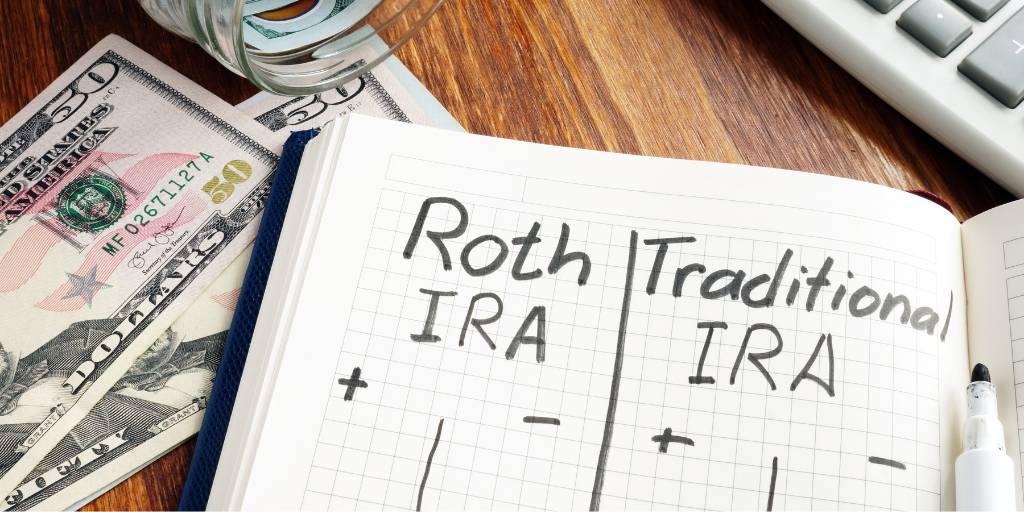
Retirement Accounts Guide for Gen X late starters! In this guide, we’ll break down the different types of retirement accounts how they work, and why they’re powerful tools for building long-term wealth even when starting from broke. Understanding the basics of retirement accounts is a crucial first step toward breaking free from broke and beginning your comeback tour.
Back to: Invest & Retire More From This Series: Overview Simple, Effective Investing | Investing in Your 50s When Broke | DIY vs Advisor | Risk Level & Portfolio | Fund Types & Fees
Key Takeaways
- This article provides a comprehensive retirement accounts guide over 50, emphasizing the importance of understanding types of accounts and tax implications.
- It explains tax-deferred and tax-free accounts, detailing 401(k)s, Traditional IRAs, Roth IRAs, and Roth 401(k)s.
- Prioritize employer match contributions first, followed by Roth IRA, and lastly Traditional IRA for effective saving.
- Avoid common mistakes like missing employer matches and making early withdrawals to grow your retirement savings effectively.
- Take action now by checking your budget, choosing the right account, and automating savings to build wealth over time.
Understand the Tax on Retirement Accounts
Retirement accounts are savings plans designed to grow your money for retirement, with tax advantages. By investing your contributions, these accounts help small savings grow big over time. Here’s a quick overview:
Tax-Deferred Retirement Accounts
Tax-deferred means that the money you earn goes into your retirement account before any federal taxes are withheld. However, when you withdraw your retirement savings (age 59 1/2 at earliest) you’ll pay taxes on the withdrawal amount when that money is recognized in your next tax filing. That is why it’s called tax deferred. A 401(k) is tax deferred.
Tax-Free Retirement Accounts
Tax free means withdrawals in retirement are not taxed, however the money you contribute is taxed (from your paycheck) when you earn it. So you pay federal income tax on your money, then contribute it to your retirement account. A Roth IRA is a considered tax-free.
Key Types of Retirement Accounts Explained
401(k)
An employer-sponsored plan where you contribute tax-deferred dollars. Many employers match contributions—free money you don’t want to miss!
Traditional IRA
Deduct contributions now, pay taxes in retirement. Ideal for most earners but see IRS rules on Traditional IRAs.
Roth IRA
Pay taxes federal taxes now when you earn it, enjoy tax-free withdrawals later. Perfect if you expect higher taxes in retirement.
Roth 401(k)
An employer- sponsored plan (if offered) where your employer contributes an amount into a separate 401(k) and you contribute after tax dollars to a Roth IRA. This allows you to take advantage of your employer’s 401(k) match while also leveraging the tax free withdrawals on the Roth portion in retirement.
Retirement Account Types Table & Chart
| Account Type | Best For | Opened By | Taxes & Withdrawals | 2025 Limit |
|---|---|---|---|---|
| 401(k) (Employer Match) | Employees | Employer (account in your name, portable if you change jobs) | Tax-deferred now; pay taxes on withdrawals in retirement | $23,500 (+$7,500 for age 50+) |
| Traditional IRA | Anyone with income | You | Tax-deductible based on income (per IRS rules) | $7,000 (+$1,000 for age 50+) |
| Roth IRA | Anyone with income | You | Pay taxes on contributions now; tax-free withdrawals in retirement | $7,000 (+$1,000 for age 50+) |
| Roth 401(k) (Employer Match) | Employees | Employer (account in your name, portable if you change jobs) | Taxes withheld from paycheck; withdrawals in retirement are tax-free. Employer match is tax-deferred, taxed upon withdrawal. | $23,500 (+$7,500 for age 50+) |
How to Prioritize the Right Investing and Saving Account
Different accounts have different advantages but one thing all personal finance experts can agree on is the importance of prioritizing your employer’s match opportunity before anything else. The match is free money and your quickest route to accumulating wealth. Match beats Roth, Roth beats Traditional, Traditional beats nothing at all.
Priority 1: Workplace Plan w/ Match
Start with a 401(k) to grab any employer match. An employer match is free money to you and the quickest route to building retirement savings. If you are behind on retirement savings or late getting started get to your HR department fast and take full advantage of the employer match.
Priority 2: Roth IRA
Choose a Roth IRA. Roth IRAs have income limits, so check IRS.gov.
Priority 3: Traditional IRA
Have you reached your contribution limits with your 401(k) and Roth IRA? Open a traditional IRA and keep saving!
Don’t Forget to Take Advantage of Catch Up Contributions over 50.
Use catch-up contributions to save more (e.g., an extra $7,500 for 401(k) or $1,000 for IRAs).
Mistakes to Avoid
Always avoid these mistakes, especially if you are starting to save for retirement late and are behind.
Missing Employer Matches
It’s free money—always contribute enough to get it!
Early Withdrawals
Pulling money out before 59½ often triggers taxes and penalties.
Waiting Too Long
Every dollar you save now grows significantly over time. The best time to plant a tree was 20 years ago. The second best time is now!
How to Get Started Today
Check Your Budget
Use our Zero-Based Budgeting Tool to find extra for retirement savings. Or consider a free trial of Monarch, our budgeting tool of choice. (We may earn a commission for your use of this link. Thank you for your support.)
Pick an Account
Ask your employer about a 401(k) with employer match. Don’t pass up the free money. If no match is available, open a Roth IRA with a low-cost provider like Vanguard or Fidelity. Fidelity’s ZERO funds (zero fees!) are a part of our personal portfolio. Open a Fidelity Roth IRA account with as little as $10 today. (We may earn a commission for your use of this link. Thank you for your support.)
Automate Savings
Start with as little as $10/month—small amounts add up!
Resources
- IRS Retirement Plans for official rules and limits.
- Try our Retirement Calculator to estimate your savings needs.
- Find a fee-only planner at NAPFA.org.
Investing in Your 50s Series
Take Action Now
You don’t need a big budget to start saving for retirement. Even $25/month can grow over time with the power of compound interest. However, if you are starting late you’ll need to squeeze as much as you can from those paychecks to catch up on investing and saving. Visit our Budgeting Tips and Debt Management pages for more ways to save, or sign up for our free financial checklist to stay on track!
Back to: Invest & Retire