Pay Off Debt or Save for Retirement?
We Solved The Rubik’s Cube. This Should be Like, Totally Easy!
This website contains affiliate links, meaning we may earn a commission for purchases made through these links, at no extra cost to you. Our opinions are principled, original and our own. See how we make money. Thank you for your support.

If you’re over 50 and feeling the weight of deciding whether to pay off debt or save for retirement, you’re not alone. Many people in their 50s and beyond face this financial tug-of-war, torn between clearing high-interest debt and building a nest egg for the future. The pressure can feel overwhelming, especially if you feel “behind” on retirement planning. At Budget Coach USA, we understand the emotional and financial strain of this dilemma, and we’re here to help you navigate it with clarity and confidence. This guide will break down the pay off debt or save for retirement question and offer actionable steps to make progress on both goals, even if you’re starting later than you’d hoped.
Back to: Financial Health | More From This Series: Protecting Your Identity | Rebuilding Credit After 50 | Midlife Financial Wellness Tips
Key Takeaways
- People over 50 often struggle with the decision to pay off debt or save for retirement, facing emotional and financial stress.
- Three strategies exist: prioritize paying off debt first, save for retirement first, or balance both approaches.
- A zero-based budget helps allocate funds efficiently to either debt repayment or retirement savings, ensuring every dollar counts.
- Evaluating risk tolerance, debt levels, and income can guide the decision-making process in choosing the best financial strategy.
- Starting to act now is better than waiting, and even small steps can lead to significant progress towards financial goals.
Understanding the Pay Off Debt or Save for Retirement Dilemma
For those in their 50s, the pay off debt or save for retirement decision feels like a catch-22. On one hand, debt—whether it’s credit card balances, student loans, or a mortgage—can drain your finances and create stress. High-interest debt, in particular, grows faster than many investments, making it tempting to focus all your resources on paying it off. On the other hand, retirement savings benefit greatly from time and compound interest, and waiting too long to save can significantly reduce your future financial security.
The stakes feel higher after 50 because there’s less time to recover from financial missteps. Meanwhile, carrying high-interest debt, like a credit card with a 20% APR, can double your balance in just a few years if left unchecked. This reality makes the pay off debt or save for retirement question even more urgent. To help we’ve created a series of scenarios that shed some light on the interplay between your salary, debt and any employer 401k match opportunities you might have.
Three Options: Prioritize Saving, Debt or Both?
Choosing between paying off debt or saving for retirement in your 50s can be daunting. Should you clear debt to free up future cash or prioritize your nest egg? All options—focusing on debt, retirement savings, or a hybrid approach—are viable, depending on your finances. For example, a strong salary and employer match may favor a hybrid strategy, as the match could outweigh low-interest debt costs. The key to success lies not just in the choice but in disciplined execution. A zero-based budget, where every dollar has a purpose, ensures your money aligns with your goals. Consistent discipline drives results. Below, we outline three strategies, their pros and cons, and examples to guide your plan with confidence.
Option 1: Prioritize Paying Off Debt First, Then Saving for Retirement
This approach focuses on eliminating debt quickly before aggressively saving for retirement. You pay apply your entire budgeted amount to debts using the debt snowball while making no contributions to retirement accounts until the debt is cleared.
How It Works:
- Use a zero-based budget to allocate every dollar, using the debt snowball method. Try our debt snowball calculator. Get a free 7 day trial of Monarch.
- Contribute nothing to retirement accounts until debts are cleared.
- Once debt-free, redirect all cash from your debt snowball to retirement savings (e.g., 401(k), ROTH, Individual IRA). Try our investment calculator.
Pros:
- Clearing debt payments (e.g., $500/month on credit cards) creates significant cash flow for retirement savings in your 50s.
- Paying off debt early and fast reduces total interest paid, preserving more money long-term.
- Being debt-free provides peace of mind as retirement nears.
Cons:
- Less Time to Save: Delaying retirement contributions reduces compound interest growth.
- Missed Employer Match While Paying Off Debt: Skipping 401(k) contributions risks losing free money from employer matches.
Example
Todd and Sarah, a 52-year-old couple earning $92,000 yearly, have $24,675 in debt (excluding their home, to be paid off in 4 years by age 56) and plan to retire at 65. Their zero-based budget allocates $1,250 monthly to debt repayment until cleared, then to retirement savings, expecting a 10% annual investment return.
| Current Age | 52 |
| Retirement Age | 65 |
| Salary | $92,000 |
| Employer Match | 1:1 Match of 5% of Salary After Debt is Cleared |
| Debts | $5,125 (7%), $15,100 (9%), $3,250 (21%), $1,200 (18%) |
| Monthly Budget for Plan | $1,250 (all to debt, then to savings) |
| Time to Pay Off Debt | 25 months (2 years, 1 month) |
| Debt Balance at Retirement | $0 |
| Savings Balance at Age 65 | $387,053 |
Option 2: Prioritize Saving for Retirement First (Pays Only Minimums on Debt)
This approach maximizes retirement savings now, while making only minimum payments on debt. You contribute as much as possible to retirement accounts while making minimum payments on debt.
How It Works:
- Use a zero-based budget to maximize contributions to a 401(k) (up to $23,500 in 2025, plus $7,500 catch-up if over 50) and IRA ($7,000, plus $1,000 catch-up). Get a free 7 day trial of Monarch.
- Leverage any employer match first and direct the remaining dollars to the retirement account of your choice.
- Pay only the minimum on all debts, regardless of interest rate.
Pros:
- Maximizes Compound Growth: Saving early leverages time for investments to grow.
- Tax Benefits: 401(k) and traditional IRA contributions lower your taxable income, saving money now. Roth IRAs offer tax-free withdrawals in retirement.
- Employer Match: You capture free money from 401(k) matches, boosting savings.
Cons:
- Higher Interest Costs: Paying only minimums on high-interest debt increases total interest paid, potentially costing thousands over time.
- Ongoing Debt Burden: Carrying debt into retirement can strain your fixed income.
- Financial Stress: Juggling debt payments and savings goals can feel overwhelming.
Example:
Todd and Sarah, a 52-year-old couple earning $92,000 annually, have $24,675 in debt (excluding their home, to be paid off in 4 years by age 56) and plan to retire at 65. Using a zero-based budget, they’ll allocate $1,250 monthly by making minimum debt payments and directing the rest to retirement savings, capturing the employer match. They expect a 10% annual investment return on investments. Try our employer match calculator.
| Current Age | 52 |
| Retirement Age | 65 |
| Salary | $92,000 |
| Employer Match | 1:1 Match of 5% of Salary |
| Debts | $5,125 (7%), $15,100 (9%), $3,250 (21%), $1,200 (18%) |
| Monthly Budget for Plan | $536 to debt minimums, $714 to savings (equals $383 for match plus $331 not needed for debt minimums), then once debt is cleared $1,250 to savings |
| Time to Pay Off Debt | 88 months (7 years, 4 months) |
| Debt Balance at Retirement | $0 |
| Savings Balance at Age 65 | $399,082 |
Option 3: Prioritizing Employer Match (Maxes Out Employer Match, Remainder to Debt)
This option maxes out any employer match opportunities and then applies the remainder of their $1,250 monthly plan to debt repayment.
How It Works:
- Use a zero-based budget to allocate funds strategically: contribute enough to your 401(k) to get the full employer match.
- After securing your full employer match allocate as much as possible to your debts (e.g., credit cards) using the debt snowball.
- Once all debts are cleared, re direct cash from the debt snowball to your retirement accounts until retired.
Pros:
- Balanced Progress: You reduce debt while building retirement savings, avoiding the extremes of either approach.
- Some Compound Growth: Early retirement contributions grow over time, though not as much as prioritizing savings.
- Employer Match: You secure free money from 401(k) matches.
Cons:
- Slower Debt Payoff: Splitting funds means high-interest debts take longer to eliminate, increasing total interest paid compared to Option 1.
- Complexity: Balancing both goals requires more budgeting effort and disciplined execution.
Example:
Todd and Sarah, a 52-year-old married couple earning $92,000 annually, have $24,675 in debt (excluding their home, to be paid off in 4 years by age 56). They aim to retire at 65 using a hybrid strategy: maximizing 5% employer-matched retirement contributions and directing their remaining $1,250 monthly budget to debt repayment. They anticipate an 10%.
| Current Age | 52 |
| Retirement Age | 65 |
| Salary | $92,000 |
| Employer Match | 1:1 Match of 5% of Salary |
| Debts | $5,125 (7%), $15,100 (9%), $3,250 (21%), $1,200 (18%) |
| Monthly Budget for Plan | $383.33 to savings (amount needed to get full 5% match), $866.67 to debt, then $1,250 to savings after debt is cleared |
| Time to Pay Off Debt | 41 months (3 years, 5 months) |
| Debt Balance at Retirement | $0 |
| Savings Balance at Age 65 | $409,902 |
Payoff Debt vs. Save for Retirement Plan Summary
Options 3 is the most effective in our scenarios. Analysis showed that Option 3 performs best with higher salaries and lower interest rates, as higher salaries boost employer match contributions, and low rates create favorable conditions. Conversely, Option 1 excels when interest rates are high and salaries are lower, as it prioritizes clearing costly debt quickly, minimizing financial strain. Use the table below as a comparison to your situation to get a better idea of what plan might be best for you.
| Metric | Prioritizing Debt | Prioritizing Saving | Prioritizing Employer Match |
| Current Age | 52 | 52 | 52 |
| Retirement Age | 65 | 65 | 65 |
| Salary | $92,000 | $92,000 | $92,000 |
| Employer Match | 1:1 Match of 5% of Salary After Debt is Cleared | 1:1 Match of 5% of Salary | 1:1 Match of 5% of Salary |
| Debts | $5,125 (7%), $15,100 (9%), $3,250 (21%), $1,200 (18%) | $5,125 (7%), $15,100 (9%), $3,250 (21%), $1,200 (18%) | $5,125 (7%), $15,100 (9%), $3,250 (21%), $1,200 (18%) |
| Monthly Budget for Plan | $1,250 (all to debt, then to savings) | $536 to debt minimums, $714 to savings, then $1,250 to savings | $383.33 to savings, $866.67 to debt, then $1,250 to savings |
| Time to Pay Off Debt | 25 months (2 years, 1 month) | 88 months (7 years, 4 months) | 41 months (3 years, 5 months) |
| Debt Balance at Retirement | $0 | $0 | $0 |
| Savings Balance at Age 65 | $387,053 | $399,082 | $409,902 |
How to Decide if You Should Pay Off Debt or Save for Retirement
Your financial situation is unique, and various factors determine the best path to your goals. For example, a generous employer match, high income, and low-interest debt might make a hybrid strategy—balancing debt repayment and investing—highly attractive. Conversely, high-interest debt and a lower salary could make prioritizing savings less effective, favoring aggressive debt repayment. Before you decide, consider these three things:
Evaluate Your Risk Tolerance
When deciding whether to pay off debt or save for retirement, evaluating your risk tolerance is key. Debt equals risk. If you have a low risk tolerance, prioritizing debt repayment, especially high-interest debt, offers a guaranteed return by reducing interest costs, providing financial peace of mind. Conversely, if you have a higher risk tolerance, investing in retirement accounts like a 401(k) or IRA may be more appealing, as these can yield higher long-term returns despite market volatility. Consider your financial goals, income stability, debt interest rates, and time horizon to retirement to align your decision with your comfort level and overall financial plan.
Evaluate Your Debt and Income
The choice between prioritizing debt repayment, maximizing early retirement savings, or balancing both depends on salary size and debt interest rates. Higher salaries with larger employer matches favor balancing savings and debt repayment or prioritizing savings, as compound interest outpaces moderate debt interest (7–21%). High debt interest rates or larger balances tip the scale toward rapid debt payoff to minimize interest costs, especially with lower salaries where smaller matches reduce savings growth. Using our example, a hybrid approach—maxing out the employer match then focusing on debt—extends debt repayment by just 14 months while boosting retirement savings by $22,000. A higher debt-to-income ratio shifts the balance, favoring faster debt repayment over maximizing employer match, as it reduces the benefits of the hybrid approach and prioritizes debt elimination to minimize interest costs.
Start with a Zero-Based Budget
A zero-based budget is crucial for guiding financial decisions because it assigns every dollar of income to a specific purpose—whether debt repayment or savings—ensuring no money is wasted or unaccounted for. This disciplined approach provides a clear, easy-to-understand road map to financial success, as demonstrated by Todd and Sarah’s scenarios, where allocating a $1,250 budget led to distinct outcomes based on precise choices. However, even the best plan, like prioritizing savings or debt repayment, is ineffective without disciplined execution. Sticking to the budgeted amounts ensures the plan’s success by aligning actions with goals. A zero-based budget’s clarity drives accountability, but only consistent follow-through turns numbers into results. Get a free 7 day trial of Monarch.
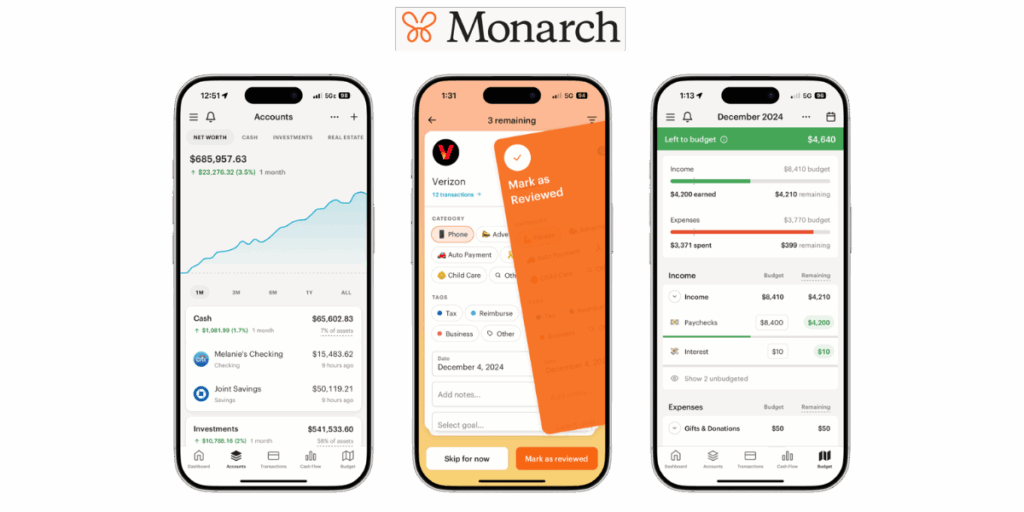
Get a free 7 day trial of Monarch. Monarch is our zero-based budgeting app of choice. Read more about the best zero-based budgeting apps for 2025.
Conclusion: Take Action Today
Deciding whether to pay off debt or save for retirement doesn’t have to paralyze you. By assessing your finances, prioritizing high-interest debt, maximizing employer matches, and using strategies like the snowball method or a hybrid plan, you can make meaningful progress. If you’re in your 50s and feeling behind, remember: starting now is better than waiting. Start today by evaluating your budget and creating a game plan for your future.
Knowing your numbers creates more certainty. Certainty reduces stress. Less stress leads to better living.
Back to: Financial Health
Get a Free 7 Day Trial of Monarch
Monarch simplifies finances by bringing all your accounts together into one clear view. Always know where your money is and where it’s going, achieve your goals quicker, and collaborate with your partner or professional at no extra cost.