
50/30/20 Budgeting: A Simple and Effective Way to Manage Your Finances
Your Complete 50/30/20 Budgeting Guide + Free Google Sheet Template
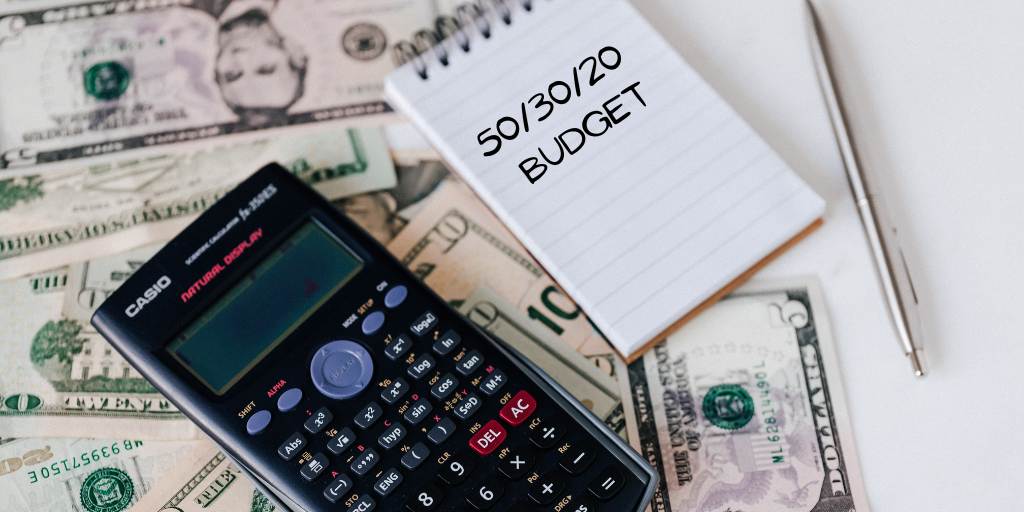
Introduction to 50/30/20 Budgeting
The 50/30/20 rule is a straightforward budgeting method that divides your after-tax income into three main categories: 50% for essential needs, 30% for wants, and 20% for savings and debt repayment. This approach has roots in personal finance principles dating back to early 20th-century advice from economists like Irving Fisher, who emphasized proportional allocation of income for stability, though adapted into its modern form for today’s budgeteers.
Unlike zero-based budgeting, which requires assigning every dollar to a specific purpose, the 50/30/20 method provides more flexibility and ease of use, making it suitable for beginners or those who find detailed expense tracking overwhelming. In today’s environment of fluctuating costs and economic pressures, this system helps promote balanced financial habits without the need for constant micromanagement.
How the 50/30/20 Rule Works
The core of the 50/30/20 rule involves categorizing your take-home pay—your income after taxes and deductions—into proportional buckets:
- 50% for Needs: This covers essentials required for basic living, including housing (rent or mortgage), utilities, groceries, transportation (gas, public transit, or car payments), insurance (health, auto, home), minimum debt payments, and healthcare costs. For example, stick to basic food staples rather than luxury items to keep this category in check.
- 30% for Wants: These are non-essential expenses that enhance your lifestyle, such as dining out, entertainment, hobbies, subscriptions (like streaming services), gym memberships, and vacations. The key is moderation to prevent overspending and lifestyle creep.
- 20% for Savings and Debt: Allocate this to building financial security, including contributions to emergency funds, retirement accounts (e.g., 401(k) or IRA), investments, or extra payments on debts like credit cards or loans. Prioritize high-interest debts to maximize impact.
To calculate your after-tax income, review your pay stubs. For instance, if your monthly take-home pay is $5,000, you’d aim for $2,500 on needs, $1,500 on wants, and $1,000 on savings/debt.
Adaptations exist for varying circumstances: Low-income households might shift to a 60/20/20 split to accommodate higher essential costs, while high earners could boost savings to 30%. Visual aids can help—imagine a pie chart dividing your income accordingly for quick reference.
Pros and Cons of 50/30/20 Budgeting
Pros:
- Simplicity: Easy to understand and implement without tracking every expense.
- Flexibility: Allows room for enjoyment while building financial security.
- Promotes long-term habits: Encourages saving and debt reduction automatically.
- Scalability: Works for various life stages, from students to retirees.
Cons:
- Less precise than zero-based budgeting for those with irregular incomes.
- May not suit high-cost living areas where needs exceed 50%.
- Requires discipline to categorize accurately.
Compared to alternatives like envelope budgeting (which uses physical cash divisions for strict control) or pay-yourself-first (prioritizing savings upfront), 50/30/20 strikes a balance between structure and freedom. According to a CFPB survey, similar proportional budgeting methods have helped users increase savings by an average of 15-20% over traditional tracking
Step-by-Step Guide to Implementing 50/30/20 Budgeting
Calculate Your After-Tax Income
Gather recent pay stubs and subtract taxes, insurance premiums, and other deductions. Use formulas like: Take-Home Pay = Gross Income – (Taxes + Benefits).
Categorize Your Expenses
Analyze bank and credit card statements from the last three months. Sort items into needs, wants, and savings/debt using tools like spreadsheets.
Allocate the Percentages
Multiply your take-home pay by 0.5, 0.3, and 0.2 to get dollar targets. For $4,000 monthly: $2,000 needs, $1,200 wants, $800 savings.
Track Your Spending
Monitor progress weekly with apps or sheets; adjust as needed to stay within limits.
Review and Refine Monthly
At month-end, evaluate variances and refine for the next cycle.
Practical tips include automating savings transfers via your bank and using cash envelopes for wants to curb impulse buys.
Using a 50 30 20 Budget Google Sheet for Tracking
Google Sheets is an excellent, free tool for managing your 50/30/20 budget due to its accessibility, real-time updates, and customization options. A well-designed 50 30 20 budget Google Sheet can automate calculations, visualize progress, and simplify tracking.
Here’s how to set one up:
- Sheet 1: Income Calculator: Enter your gross income and deductions; use formulas like =A2*0.5 to auto-compute needs allocation.
- Sheet 2: Expense Tracker: Include columns for date, description, amount, and category (with dropdown menus). SUMIF functions tally totals per category.
- Sheet 3: Dashboard: Insert pie charts to compare actual vs. budgeted percentages; apply conditional formatting (e.g., red for over 50% on needs).
- Sheet 4: Monthly Summary: Track trends over time with line graphs.
To create your 50 30 20 budget Google Sheet, start from scratch or search for free templates on sites like Vertex42. Advanced users can add Google Apps Script for alerts.
Real-Life Examples and Case Studies
- One User Remarked: “When I created my very first budget as I was starting to go out on my own I used the 50/30/20 as a guideline to figure out approximately how much I should be spending on categories that fell into each section. Since then I modified budget amounts based on my income as it grew and other priorities as life progressed. At this point, I (30M) just use the 50/30/20 guideline as a gut check to make sure things aren’t way out of proportion rather than the basis of all my decision making. I use a detailed spreadsheet to determine specific budgeting allotments for decision making today.”
- Another User Said: “I just recently restructured my own budget utilizing this method, actually. The needs category also includes a $300 “car bill” so we can save up for a new car to pay in cash eventually. If I didn’t include that, I would be at 51%, but we don’t want a car loan when it comes time.” My allocations are: 55% Needs, 20% Savings, and 25% Wants.
Case studies from NerdWallet show users reducing credit card debt by 25% within a year using this method, while forums like r/budgeting highlight successes in building six-month emergency funds.
Frequently Asked Questions (FAQs)
Conclusion
The 50/30/20 budgeting method delivers a practical framework for financial equilibrium, fostering sustainable spending and saving without complexity. Start today by setting up your 50 30 20 budget Google Sheet and explore our hub for more alternatives like envelope budgeting.
Ready to Explore More Budgeting Methods That Actually Fit Your Life?
The 50/30/20 rule is a fantastic, low-stress way to get your finances under control, but it’s not the only alternative to rigid zero-based budgeting. Depending on your personality and goals, one of these other approaches might feel even more natural:
- Envelope Budget System – Perfect if you love the tangible feel of cash and want iron-clad spending limits.
→ Read the full guide here - Pay Yourself First Budgeting – Ideal for anyone whose #1 priority is building wealth or crushing debt fast.
→ Read the full guide here - Reverse Budgeting – Great for savers who want to “set it and forget it” while still enjoying life.
→ Read the full guide here - No-Budget Budget – The ultimate minimalist method for people who hate tracking but still want control.
→ Read the full guide here
Head back to the main hub – Alternatives to Zero-Based Budgeting – to compare all five methods side-by-side and find the one that finally feels right for you.
Whichever path you choose, you’ve already taken the hardest step—just by showing up and learning.